
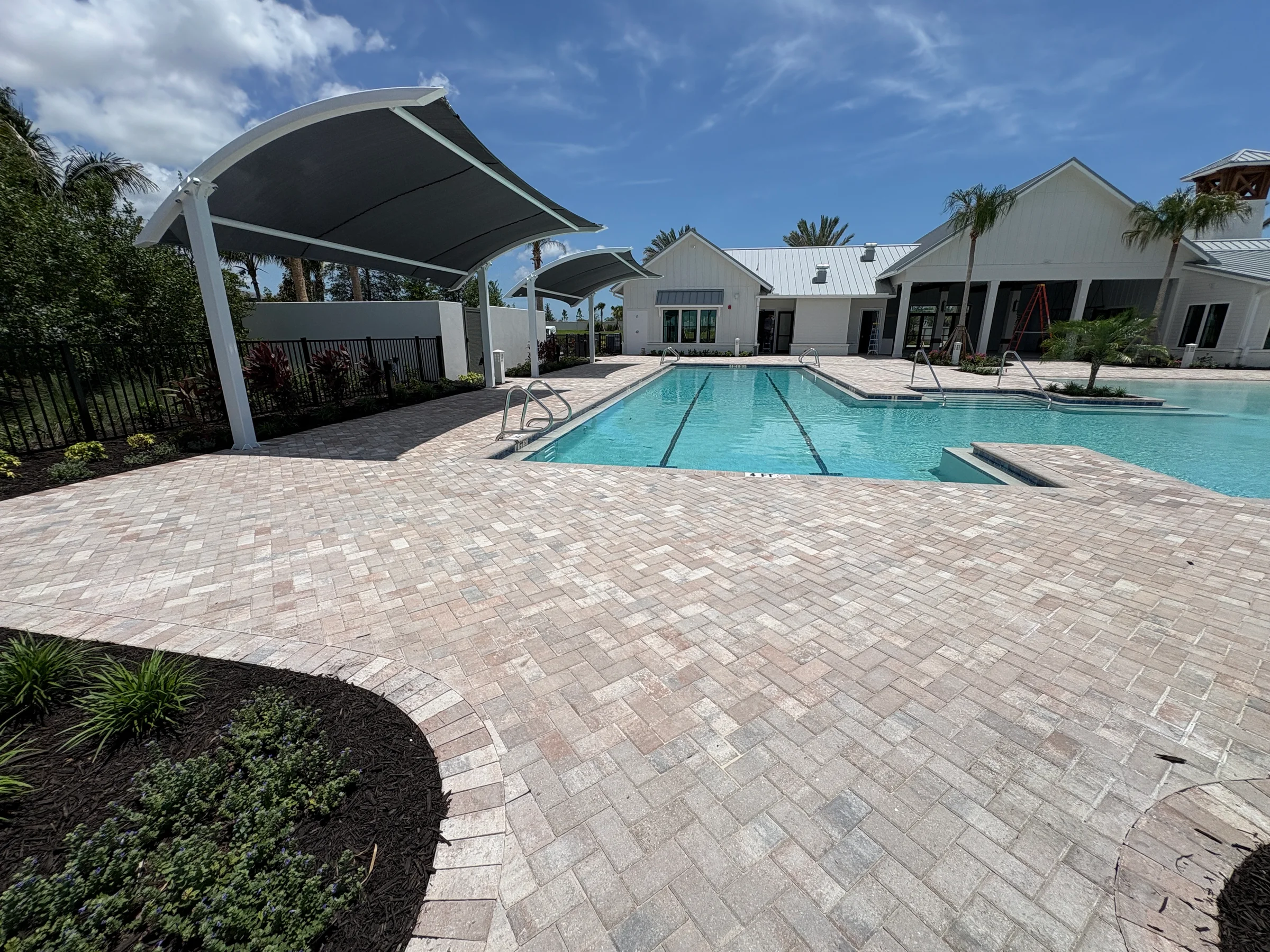
A pool deck has to work at the waterline, under wet feet, around furniture, and through a Florida downpour. Before booking paver pool deck work in Lakewood Ranch, compare more than colors and square-foot prices. The exact paver, existing surface, preparation, drainage, coping, access, approvals, and care expectations all belong in the conversation. These seven questions help homeowners compare complete proposals and choose a surface for the way the pool area is actually used.
1. Are pavers or poured concrete a better fit around this pool?
Pavers form a modular surface made from individual units, while poured concrete creates a continuous slab. Pavers offer broad flexibility in formats, patterns, borders, and limited-area repairs. Concrete has its own finish, joint, reinforcement, and repair decisions. Neither system is automatically better for every pool or automatically less expensive.
Compare the complete assemblies for the property. Removal, access, preparation, grade correction, drainage, coping transitions, curves, steps, enclosure interfaces, and cleanup can change either proposal. The useful question is which finished system fits the pool geometry, appearance, maintenance expectations, and written project scope—not which material wins in a general online comparison.
2. Which paver and finish suit wet feet and Florida sun?
There is no universal best paver for every pool deck. Compare the exact product and surface finish for exterior pool-deck use, then consider texture, color range, format, pattern, coping compatibility, availability, and care guidance. No pool surface should be described as slip-proof; product suitability works together with slope, drainage, cleaning, wear, and how people move through the space.
Surface temperature also depends on more than the material label. Color, texture, density, direct sun, shade, and time of day all affect what a deck feels like. Review representative samples outdoors when the pool is normally used. Look at enough pieces to understand the full color blend, and compare them with the coping, pool finish, home exterior, enclosure frame, and landscape that will remain.
3. What preparation is included below the finished pavers?
The visible pattern is the final layer of the project. A proposal should also define the anticipated removal, disposal, excavation or surface preparation, supporting assembly, setting work, joints, edge restraint, cuts, transitions, compaction, and cleanup. On a replacement deck, cracks, settlement, hollow areas, loose coping, and recurring low spots are conditions to document before demolition begins.
Ask how concealed conditions will be handled if removal reveals something different from what could be seen during the estimate. Pavers should not be treated as a cosmetic cover for an unexplained support or drainage problem. If an existing concrete deck might remain, confirm that its condition, elevations, cracks, movement, drainage, and proposed installation system will be evaluated before that option is included in the scope.
4. How will water move across the deck after heavy rain?
Pool splash-out is only part of the water picture. Roof runoff, deck cleaning, irrigation, and intense rain can all reach the same surface. Note where water collects now and how the deck meets lanai doors, drains, coping, planting beds, the yard, and any screen-enclosure track. Photos taken after rain can make intermittent trouble spots easier to explain during an estimate.
Ask how the proposed elevations and drainage details connect those fixed points. Paver joints and surface texture do not replace deliberate grading or a suitable drainage path. If a wider property drainage condition falls outside the pool deck scope, that boundary should be clear before work is scheduled rather than discovered after the new surface is in place.
5. What should a complete pool deck estimate include?
Deck area matters, but a square-foot figure cannot describe curves, coping, drains, steps, tight equipment access, an existing enclosure, or the condition below the old surface. Material selection, pattern, borders, detailed cuts, demolition, hauling, preparation, drainage work, permits or reviews when applicable, protection of nearby areas, and cleanup can all affect the price.
Compare proposals by their boundaries and responsibilities. The deck limits, specified product and finish, pattern, coping responsibilities, removal, preparation, joints, edges, transitions, drainage work, cleanup, anticipated schedule, care guidance, payment terms, written warranty terms if offered, and change process should be understandable. A lower total is not a complete comparison when key work is missing or unclear.
6. Which Lakewood Ranch approvals and scheduling steps come first?
Lakewood Ranch includes properties in both Manatee and Sarasota counties, and individual communities may have separate design-review requirements. The property address determines which documents and government requirements need to be checked. Community approval does not replace a permit or other jurisdictional requirement, and a project accepted at another home may not establish the current path for yours.
Before booking, confirm who is responsible for each submission and what must be finalized before materials are ordered. A realistic timeline may include site review, final measurements, product availability, community review, permitting when applicable, related pool or enclosure coordination, access preparation, weather, and the work itself. Ask for both the planning timeline and the anticipated on-site sequence.
7. What maintenance will the selected paver system need?
Pool decks collect leaves, sunscreen, food, metal furniture marks, irrigation residue, and pool splash-out. Routine sweeping or rinsing, prompt spill care, open drainage paths, vegetation control, joint upkeep, and periodic checks at coping, drains, edges, and enclosure posts help homeowners notice changes early. Cleaning methods should match the exact paver, finish, joint material, and any treatment already on the surface.
Sealing and pressure washing are not one-answer maintenance steps. A sealer can affect color, sheen, traction, stain response, and future reapplication, while aggressive washing can disturb joints or alter a surface. Ask what the product and joint-system guidance recommends, what any proposed treatment is intended to do, and which care information will be provided when the project is complete.
Quick answers
Lakewood Ranch paver pool deck FAQs
What is the best material for a pool deck in Florida?
There is no single best material for every property. Compare the exact paver or stone and finish for exterior wet-area use, surface feel, outdoor sample appearance, drainage, coping details, installation scope, care expectations, availability, and complete project cost.
What type of pavers are best for a pool deck?
The best fit is a specific product and finish suited to the intended exterior pool setting. Review texture, color, format, wet-use suitability, coping compatibility, manufacturer guidance, installation details, and maintenance rather than choosing from the broad word “paver” alone.
Is it cheaper to pour concrete or install pavers in Florida?
Not in every case. Removal, preparation, access, grade and drainage work, finish or paver selection, curves, coping, steps, transitions, approvals, cleanup, and future repair expectations can change the complete price for either system.
Is it better to have pavers or concrete around a pool?
Pavers provide a modular surface with broad pattern and border flexibility; poured concrete creates a continuous surface with its own finish and joint decisions. Compare complete proposals, site conditions, appearance, care, repair approach, and budget for the individual pool.
Can pavers be installed over an existing concrete pool deck?
That depends on the existing slab's condition, movement, elevations, cracks, drainage, coping, door thresholds, and the proposed installation system. The surface should be evaluated before an overlay is treated as an appropriate scope.
Do pool deck pavers need to be sealed?
Not automatically. The answer depends on the exact paver, finish, joint system, exposure, current condition, and product guidance. Understand how a proposed sealer may affect appearance, traction, cleaning, and future maintenance before it is applied.