
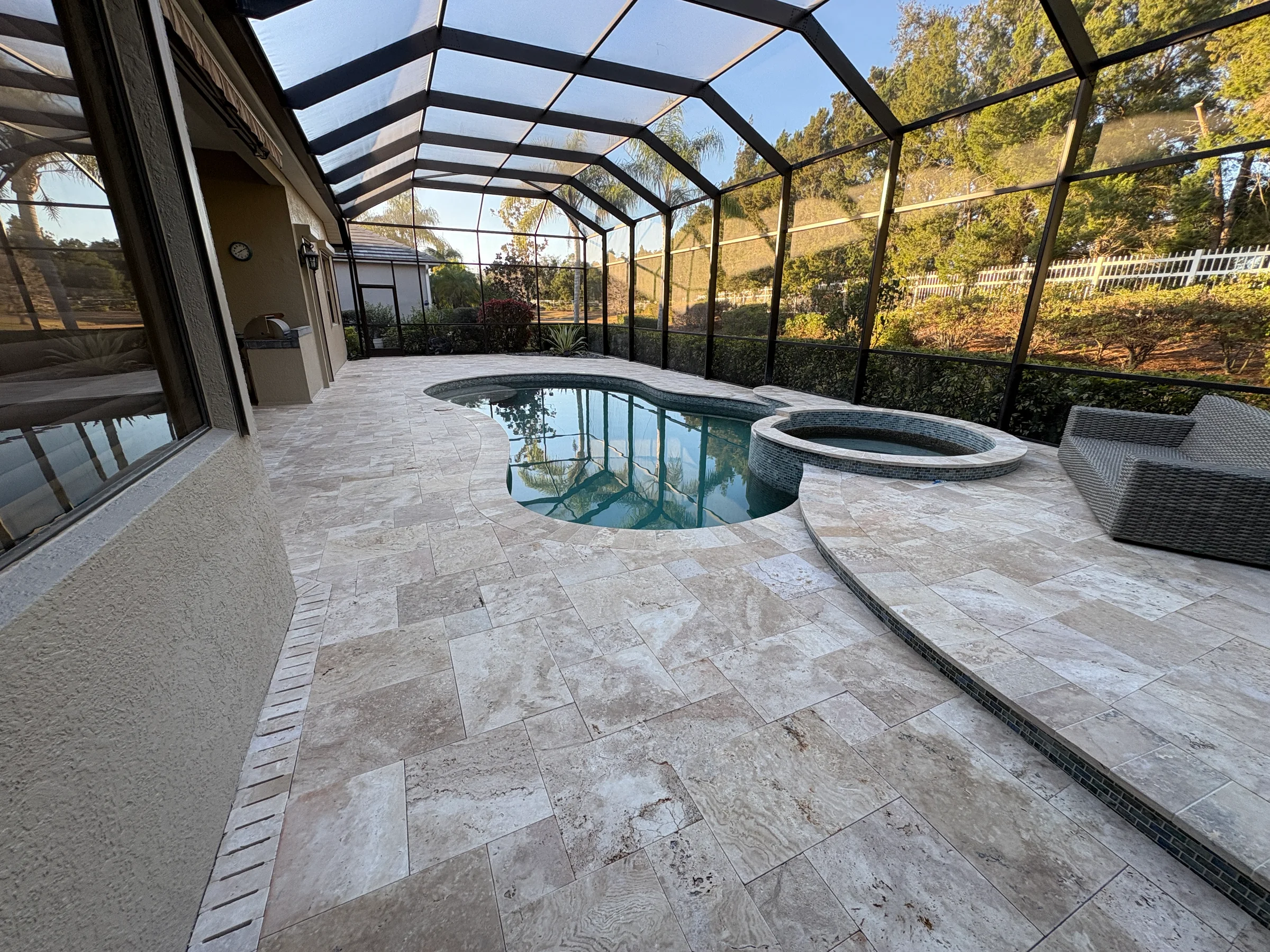
Marble and travertine can both create a beautiful natural-stone pool deck, but the better choice is not determined by the stone name alone. The exact product, finish, color range, intended exterior use, deck exposure, installation details, and care routine matter more than a blanket claim that one stone is always cooler, safer, or easier to own. This side-by-side guide helps Florida homeowners compare the decisions that will still matter after the samples leave the table.
Side-by-side decision guide
Marble and travertine at a glance
| Stone | Visual character | Plan for | Care |
|---|---|---|---|
| Travertine | Warm, earthy movement with visible pores, textural variation, and relaxed edge character. | Confirm the exact finish, range, thickness, exterior wet-area suitability, coping details, drainage, and installation assembly. | Use stone-compatible cleaners and understand how pores, joints, stains, any fill, and any proposed treatment will be maintained. |
| Marble | A brighter, more refined field with veining and tonal movement that can feel crisp and architectural. | Verify the specific marble and finish for outdoor pool use, then review representative pieces, wet-use texture, coping, and transitions. | Avoid acidic or aggressive products; plan for prompt stain care and follow guidance for the selected stone, finish, and treatment. |
The short answer: compare finishes, not just stone names
Travertine is often the better visual fit when a homeowner wants warm variation, an organic texture, and a relaxed pool setting. Marble often suits a brighter, more tailored design with stronger veining and a cleaner architectural feel. Those are useful starting points, not performance guarantees.
Each category includes different quarries, color ranges, finishes, thicknesses, and product specifications. A tumbled travertine and a leathered marble will not behave or feel exactly like every other product sold under the same stone name. Before choosing, verify that the actual paver and finish are intended for the proposed exterior pool application and review enough pieces to understand the range you will receive.
Compare the look across the whole deck—not one sample
Travertine commonly shows pores, clouds of color, and warmer cream, gold, walnut, or silver-gray movement. Marble can show finer or bolder veining and a lighter, more luminous field. Neither natural stone is manufactured to repeat perfectly, so a single ideal sample cannot represent an entire pool perimeter.
Lay several representative pieces beside the pool finish, coping, house color, lanai doors, enclosure frame, and landscape materials that will remain. View them in direct light and shade. Ask how the installer will blend the range across large open areas, narrow walkways, steps, and highly visible transitions. If uniformity is the priority, be candid about how much natural variation you will enjoy rather than tolerate.
Judge barefoot comfort and wet-use texture product by product
Homeowners frequently ask which stone stays cooler or offers more traction. Color, density, texture, direct sun, shade, moisture, cleaning, and wear all influence the real experience. No natural-stone pool deck should be described as slip-proof, and the broad words marble and travertine cannot answer a finish-specific safety question.
Ask to compare the exact finishes under conditions that resemble the deck's use. When supplier guidance allows, look at representative material dry and damp. Consider the routes between the water, steps, spa, outdoor shower, furniture, lanai doors, and yard. A surface decision should work with deliberate slope and drainage, because texture alone cannot correct standing water or an unresolved low area.
Choose the care routine at the same time as the stone
Both marble and travertine are natural stone, and both deserve cleaners and methods suited to the exact surface. Pool splash-out, sunscreen, leaves, food, metal furniture, irrigation residue, and trapped moisture can affect appearance. Acidic household products can etch calcium-based stone, while overly aggressive washing can alter finishes or disturb joints.
Travertine's visible pores and any filled areas add their own inspection points. Marble's polished-looking visual character can make dull spots, etching, or stains more noticeable on some selections. That does not make one stone automatically high-maintenance and the other effortless. Ask what routine cleaning is recommended, how spills should be handled, what changes to watch for, and whether a proposed treatment may alter color, sheen, texture, or future upkeep.
Sealing is not a universal calendar item. The stone, finish, porosity, exposure, pool environment, existing treatments, and product guidance should determine whether it is appropriate and when it needs evaluation. A promise that every natural-stone deck follows the same schedule is less useful than care instructions tied to the installed material.
Installation details can outweigh the material comparison
A successful pool deck is a complete assembly, not a stack of attractive pavers. Existing-surface removal, supporting conditions, preparation, finished elevations, drainage, coping, cuts, joints, edges, steps, thresholds, drains, equipment access, and screen-enclosure interfaces all affect the result. The same stone can perform very differently when those details change.
For a replacement deck, document cracks, movement, hollow areas, recurring low spots, damaged coping, and water that approaches the house or enclosure track. Ask what can be evaluated before removal, how concealed conditions will be handled, and which corrective work is included. For a new pool, coordinate the shell, coping, deck, drainage, enclosure, and equipment routes before the field pattern is finalized.
Compare complete estimates instead of stone-only prices
Material cost matters, but a square-foot stone price is not the finished project price. Availability and range, demolition, hauling, site access, preparation, drainage corrections, coping, curves, detailed cuts, borders, steps, enclosure conditions, protection, cleanup, and approvals can all change the total. One material may also create more waste or detailed labor for a particular layout.
Ask each proposal to identify the exact material and finish, deck limits, removal, preparation, installation assembly, pattern, coping responsibility, cuts, joints, edges, transitions, drainage work, cleanup, care information, schedule dependencies, payment terms, change process, and any written warranty terms. Comparing equal scopes is the only meaningful way to decide whether marble or travertine is the better value for the property.
What should Lakewood Ranch homeowners check before deciding?
Lakewood Ranch properties can fall in Manatee or Sarasota County, and individual communities may have separate review requirements. The address, current community criteria, survey, existing pool and deck conditions, drainage, access, and related enclosure work should be part of the early conversation. An approval granted for another property does not establish the current process for yours.
Florida rainfall also makes water movement a priority. Note where runoff and splash-out travel now, where water remains after a storm, and how the deck meets drains, doors, coping, landscape beds, and enclosure tracks. Marble versus travertine is an important design decision, but neither material replaces a project-specific drainage plan.
A practical way to make the final choice
Choose travertine when its warmer, more textural range fits the architecture and you are comfortable with the exact stone's pores, finish, and care guidance. Choose marble when its brighter field and veining support the design and the specific exterior finish, natural range, and maintenance expectations fit how the pool area will be used.
If the decision is still close, stop comparing category claims and compare the actual candidates. Put representative samples in the setting, confirm intended use, review the complete installation details, and price equivalent scopes. The better pool deck is the one whose appearance, surface, ownership routine, and full project plan all work together for your home.
Quick answers
Marble vs. travertine pool deck FAQs
Is marble better than travertine for a pool deck?
Neither is universally better. Compare the exact products and finishes for exterior wet-area suitability, appearance, surface feel, natural variation, installation requirements, care, availability, and complete project cost.
What is the best stone for a pool deck in Florida?
The best fit is a specific exterior-rated product and finish that suits the property's exposure, wet-foot routes, drainage, design, maintenance expectations, and budget. A stone category alone is not enough to make the decision.
Does marble or travertine stay cooler around a pool?
Surface temperature varies by the exact stone, color, density, finish, direct sun, shade, and time of day. Compare representative samples outdoors when the pool is normally used instead of relying on a blanket material claim.
What color travertine is best for a pool deck?
There is no universal best color. Compare representative pieces with the home's exterior, coping, pool finish, enclosure frame, and landscape, and consider how the full natural range will look in sun and shade.
Do marble and travertine pool decks need to be sealed?
Not on one universal schedule. The exact stone, finish, porosity, exposure, pool environment, proposed treatment, and manufacturer or stone-care guidance should determine whether sealing is appropriate and how it is maintained.